Posts
Posts


Paul Dirac:
ONLINE LECTURE SERIES
Strange Genius: The Life and Times of Paul Dirac http://w.on24.com/r.htm?e=175358&s=1&k=B5E9996007CF8D6A4D5CDB3D2DBC8D71
Page under development...meanwhile, you can listen to the lecture.
Compare and contrast the following sources on Paul Dirac. How can you organize your thoughts on these different information sources? Would a table help? How about an idea map for each one? What is the best way for you to organize the information so you can compare and contrast iy?
http://en.wikipedia.org/wiki/Paul_Dirac
http://nobelprize.org/nobel_prizes/physics/laureates/1933/dirac-bio.html
http://www.gap-system.org/~history/Mathematicians/Dirac.html
http://physicsworld.com/cws/article/print/1705
Showing posts with label Physics. Show all posts
Showing posts with label Physics. Show all posts
Friday, December 11, 2009


Sunday, November 15, 2009
Eggs and Engaging Students in Sciences like Physics and Biology and Chemistry...
Here's a quote from a physics link on the, "Science of Boiling an Egg."
This document is an introduction to of some of the science relevant to preparing boiled eggs. It has evolved from a letter published in the Last Word section of New Scientist magazine (04-April-98) which answered a question by Chris Finn, who asked 'Does anybody have a formula to calculate the boiling time for a soft-boiled egg, given its weight and initial temperature?'.
Source: http://newton.ex.ac.uk/teaching/CDHW/egg/; Accessed 15 Nov 2009.
Additional reading at:
http://newton.ex.ac.uk/teaching/CDHW/egg/#hard
Saturday, October 18, 2008
Science of Transistor Radios
Today's column listed an article on the transistor radio:
Transistor radio story posted October 18, 2008
The story offers a good way to interest some people in science and engineering. For example, a comparison and contrast could be done on the effect of transistor radios and MP3's on teen culture, someone might want to build a transistor radio or a computer, one might study electricity, someone else might study sound waves. A news story on historical development of the transistor radio could, thus, lead to a class full of students working on science activities, all different, yet, linked by the transistor radio. Because the students could select something of interest to them, it is likely they would be engaged in their studies.
More Sources:
Have fun,
Dr. J
Transistor radio story posted October 18, 2008
The story offers a good way to interest some people in science and engineering. For example, a comparison and contrast could be done on the effect of transistor radios and MP3's on teen culture, someone might want to build a transistor radio or a computer, one might study electricity, someone else might study sound waves. A news story on historical development of the transistor radio could, thus, lead to a class full of students working on science activities, all different, yet, linked by the transistor radio. Because the students could select something of interest to them, it is likely they would be engaged in their studies.
More Sources:
- http://www.vintageprojects.com/radio/transistor-radio.pdf
- http://www.pcmech.com/byopc/
- http://en.wikipedia.org/wiki/Heathkit
- http://www.retrothing.com/2006/03/heathkit_h8_dig.html
- http://blog.modernmechanix.com/2006/06/23/the-new-heathkit-personal-computing-systems/
- http://www.heathkit-museum.com/hvmhstory.shtml
- http://www.heathkit-museum.com/computers/hvmec-1.shtml
- [Please add more in comment sections, if you know of good links. Thanks.]
Have fun,
Dr. J
Wednesday, September 10, 2008
Differentiating "Primary Sources" from "Stories about Science"
Here's a link to an article on fat genes.
Can you tell if it is a "primary source" or not?
Who did the research? Did the person or people who did the research write this article?
How can you find primary source articles?
Where can you find them?
What format do they typically follow?
Is any of your work generating primary source information? Which work?
(c) 2008 J S Shipman
Can you tell if it is a "primary source" or not?
Who did the research? Did the person or people who did the research write this article?
How can you find primary source articles?
Where can you find them?
What format do they typically follow?
Is any of your work generating primary source information? Which work?
(c) 2008 J S Shipman
Wednesday, February 13, 2008
Cornstarch and Water Mixture
Water molecules go in between the starch molecules....
Vocabulary: colloid(s); suspension(s); solution(s); matter; molecules
Spangler does the "walk" across a cornstarch mixture tub on Ellen!
(Ellen Degeneres, February 13, 2008)
He tries to talk Ellen into it, but, a member of the audience does it instead...Ashley from LA.
Advice: Go fast. If not, you sink. (Spangler shows how!)
Ashley goes back and forth... She has fun and doesn't sink.
It's a lot of cornstarch!
So, what is the science?
Other "Cornstarch Science"
http://www.kidzone.ws/science/cornstarch.htm
.
.
.
More Non-Newtonian Fluid Information:
.
.
.
http://60secondscience.org/activities/cornstarchAndWater.html
.
A related journal article:
http://www.sciencedirect.com/science?_ob=ArticleURL&_udi=B6V8Y-3WRBNP8-1&_user=10&_rdoc=1&_fmt=&_orig=search&_sort=d&view=c&_acct=C000050221&_version=1&_urlVersion=0&_userid=10&md5=4313de27416a85d7f1143328ba3abab0
.
Relate this "Cornstarch Science" to the Science Standards---Lesson Plan: www.nbtc.cornell.edu/education/kitlib/getlessonplan.php?id=51
"Cornstarch Science" teaches about nanotechnology!!!
www.bowlesphysics.com/nano/Nanotechnology.ppt
Note: Some of the videos have spelling errors. Did you catch them? Try to catch errors by proof reading whenever you do any work.
Vocabulary: colloid(s); suspension(s); solution(s); matter; molecules
Spangler does the "walk" across a cornstarch mixture tub on Ellen!
(Ellen Degeneres, February 13, 2008)
He tries to talk Ellen into it, but, a member of the audience does it instead...Ashley from LA.
Advice: Go fast. If not, you sink. (Spangler shows how!)
Ashley goes back and forth... She has fun and doesn't sink.
It's a lot of cornstarch!
So, what is the science?
Other "Cornstarch Science"
http://www.kidzone.ws/science/cornstarch.htm
.
.
.
More Non-Newtonian Fluid Information:
.
.
.
http://60secondscience.org/activities/cornstarchAndWater.html
.
A related journal article:
http://www.sciencedirect.com/science?_ob=ArticleURL&_udi=B6V8Y-3WRBNP8-1&_user=10&_rdoc=1&_fmt=&_orig=search&_sort=d&view=c&_acct=C000050221&_version=1&_urlVersion=0&_userid=10&md5=4313de27416a85d7f1143328ba3abab0
.
Relate this "Cornstarch Science" to the Science Standards---Lesson Plan: www.nbtc.cornell.edu/education/kitlib/getlessonplan.php?id=51
"Cornstarch Science" teaches about nanotechnology!!!
www.bowlesphysics.com/nano/Nanotechnology.ppt
Note: Some of the videos have spelling errors. Did you catch them? Try to catch errors by proof reading whenever you do any work.
Thursday, January 24, 2008
Wednesday, January 2, 2008
Sauerkraut Science (Post under development)
Sauerkraut Science
What has sauerkraut got to do with science?
Here is a lesson about picking a science fair topic.
(Not doing science fair ? Just want a good read? Read the link at the end of this post.)
Pick something you are interested in or that you can afford to use. Then, look for the science related to that item. Okay, we've selected sauerkraut, just to prove that almost any topic can become a subject of science study.
Brainstorm: What about sauerkraut has to do with science? What does your topic have to do with science?
Do a Literature Search:
Here's a sampling of literature found on sauerkraut. Do a search on your own topic.
Brainstorm again:
Select a question from among your brainstormed ideas:
Write an experimental design:
Perform the Experiment
Collect Data
Analyze Data
Think about the Experiment and Future Experiments it suggests
Write a Laboratory Report:
Here's a wintertime story on sauerkraut that you might enjoy: http://www.thisisby.us/index.php/content/old_mother_hubbard__s_sauerkraut_soup
(c)2007, 2008 J. S. Shipman
What has sauerkraut got to do with science?
Here is a lesson about picking a science fair topic.
(Not doing science fair ? Just want a good read? Read the link at the end of this post.)
Pick something you are interested in or that you can afford to use. Then, look for the science related to that item. Okay, we've selected sauerkraut, just to prove that almost any topic can become a subject of science study.
Brainstorm: What about sauerkraut has to do with science? What does your topic have to do with science?
Do a Literature Search:
Here's a sampling of literature found on sauerkraut. Do a search on your own topic.
- Books
- Chemical Activities (Teacher's Addition) Christie L. Borgford and Lee R. Summerlin. ISBN13:97808412163 ISBN10:0841214166 paper. 244 pages.
- Traditionally Fermented Foods http://www.nap.edu/catalog.php?record_id=1939
- Newspapers and Magazines
- Journals
- Food Chemistry: Changes in biogenic amine concentrations during sauerkraut storage. Volume 69, Issue 3, 15 May 2000, Pages 309-314
doi:10.1016/S0308-8146(99)00273-3 Copyright © 2000 Elsevier Science Ltd. All rights reserved.
 - Leuconostoc sp. strains: aem.asm.org/cgi/content/full/68/6/2877
- http://dx.doi.org/10.1006/fstl.1996.0055
- Internet
- Fermented Foods
- Lactic Acid Bacteria
- Microbiology
- Create Sauerkraut (commercial kit)
- Create sauerkraut (the old-fashioned way)
- http://www.genkifoods.com/faq.html (commercial site)
- DNA Fingerprinting in Sauerkraut?
Brainstorm again:
Select a question from among your brainstormed ideas:
Write an experimental design:
- Introduction
- Materials and Methods (future tense)
- Blank data table
- Literature Cited
Perform the Experiment
Collect Data
Analyze Data
Think about the Experiment and Future Experiments it suggests
Write a Laboratory Report:
- Introduction
- Materials and Methods (Past Tense)
- Results
- Discussion and Conclusions
- Literature Cited
- What did you do well?
- What did you learn?
- Do you have something to publish?
- Do you have ideas for another experiment?
- What can you do to improve your science fair experience next time?
Here's a wintertime story on sauerkraut that you might enjoy: http://www.thisisby.us/index.php/content/old_mother_hubbard__s_sauerkraut_soup
(c)2007, 2008 J. S. Shipman
Monday, December 24, 2007
Are you an inventor?
If you are an inventor, or want to become one, recordkeeping is important. Check out this website on logbooks for inventors:
http://inventors.about.com/cs/logbook/ht/Log_book.htm
http://inventors.about.com/cs/logbook/ht/Log_book.htm
Power at its Source
The government has descriptive sites on energy production. One of them is on producing electricity from water, that is, hydroelectric power. The process is illustrated in an easy to follow format.
Water can be used to produce power:
Look at a hydroelectric power system- http://ga.water.usgs.gov/edu/hyhowworks.html
See a turbine- http://ga.water.usgs.gov/edu/hyturbine.html
Wind can also be used to generate power:
Great basic information on Windmills and...Many more links inside this one: http://www.michigan.gov/hal/0,1607,7-160-15481_19268_20778-52098--,00.html
American Windmills- http://www.windmills.net/
Fuel-less Power- http://www.fuellesspower.com/windmills2.htm
Discussion of Windmill Efficiency- http://www.nov55.com/wdm.html
Photos of Historical Windmills:
Photo of operational windmill in Australia- http://members.ozemail.com.au/~thelily
Photo of a windmill in Gardiner, NY (by Mike Rega)- http://www.istockphoto.com/file_closeup/?id=2957565&refnum=548652
Photo of the Hook Windmill- http://www.answers.com/topic/east-hampton-town-new-york?cat=travel
A gallery of 50 photographs of windmills-
http://www.windmillersgazette.com/gallery.html
The Beebe Windmill- http://memory.loc.gov/ammem/collections/habs_haer/
Modern Windmills-
The Dump that becomes a park (with windmills)- http://nymag.com/daily/intel/2007/01/youll_be_able_to_frolick_in_a.html
Windmills at NYU- http://www.nyu.edu/nyutoday/archives/20/04/PageOneStories/Wind-Power.html
Tiny windmill powers workshop- http://picasaweb.google.com/slothmuffin/PhotoADay/photo#5082014917530784274
Paintings of Windmills-
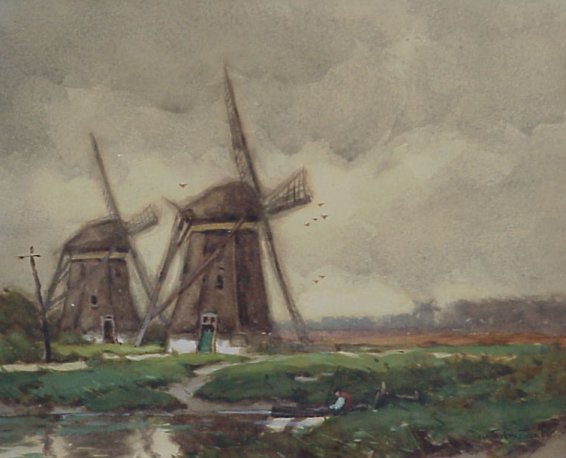
Walter C. HARTSON, (American, 1866): Dutch landscape with windmills and a figure in a boat- http://www.burchardgalleries.com/auctions/2002/jan2002/l027a.jpg
Herman A. Webster (American, 1878-1970)- http://www.timsmills.info/Journal/BULLET61.HTM
Map of Windmills in Manhattan-
Map-http://www.sunysb.edu/libmap/img0009.jpg
More information on the map- http://www.sunysb.edu/libmap/Manatus.htm
Windmills on the farm-
Grants for farm windmills- http://www.elpc.org/energy/farm/index.php?gclid=CKzbkaSewZACFTyKOAodDCYSZg
Perhaps you have developed an interest in other uses of windmills-
http://www.newsday.com/community/guide/lihistory/ny-history-hs333a,0,6371263.story
Commercial sources that may provide information on windmills (Listing does not constitute endorsement; Other commercial providers may submit links via comments)-
Beckermills
Brasada
Bask
Gaiam
windmilloutlet
You can generate power by turning a crank:
http://www.nextag.com/crank-generator/search-html
http://www.hometrainingtools.com/catalog/p_el-genhand.html
It would be good to work with pin wheels, water wheels or crank generators in lab activities or experiments to help understand the points made. Similarly field trips to old mills, singing, "Old Mill Stream," or visiting a farm where a wind mill is used, or touring the windmills of New York State (part of the Dutch settlers' cultural heritage and positive influence on the state), or in several other other states (Illinois, Indiana,Ohio, Wisconsin, Michigan, Iowa ...), would also enhance learning about sustainable energy and power generation. (If you know a good website on windmills in your state, please add it to the comments.)
Some foundations work to reduce global warming. Here are some (Listing does not constitute endorsement; Other foundations and organizations may submit links via comments)-
http://www.carbonfund.org/
https://www.greentagsusa.org/GreenTags/index.cfm
Adopt a windmill- http://www.communityenergy.biz/adopt/adopt_windmill.html
Read more:
Baker, T. Lindsay. A Field Guide to American Windmills. Norman, OK: University of Oklahoma Press, 1985. (Large volume—the ultimate windmill resource.)
Dennis, Landt. Catch the Wind: A Book of Windmills and Windpower. NY: Four Winds Press, 1976.
Ellis, Edward Robb, The Epic of New York City: A Narrative History. Carroll and Graf, Publishers, 2004.
Torrey, Volta. Wind Catchers: American Windmills of Yesterday and Tomorrow. Brattleboro, VT: The Stephen Greene Press, 1976.
Woelfle, Gretchen. The Wind at Work: An Activity Guide to Windmills. Chicago: Chicago Review Press, 1997.
A Link of Interest found while searching windmills...Farm Math for Young Children: http://www.michigan.gov/hal/Publish Post0,1607,7-160-15481_19268_20778-52087--,00.html
Friday, October 19, 2007
What do these scientists have in common?
Blaise Pascal
Pierre Curie
Albert Einstein
Booker T. Washington
George Washington Carver
Ellen Swallow Richards
There are many answers. See if you can think of some.
Pierre Curie
Albert Einstein
Booker T. Washington
George Washington Carver
Ellen Swallow Richards
There are many answers. See if you can think of some.
Tuesday, August 28, 2007
Physics Fun!
Play with these balls... What are they? Particles. See upcoming film on the Hutchison Effect
Advanced reading:

Measurement of density, sound velocity, surface tension, and viscosity of freely suspended supercooled liquids
| Journal | International Journal of Thermophysics |
| Publisher | Springer Netherlands |
| ISSN | 0195-928X (Print) 1572-9567 (Online) |
| Issue | Volume 16, Number 2 / March, 1995 |
| DOI | 10.1007/BF01441920 |
| Pages | 545-555 |
| Subject Collection | Physics and Astronomy |
| SpringerLink Date | Friday, April 22, 2005 |
Physics using Balloons:
http://www.physicsforums.com/archive/index.php/t-41611.html
Friday, August 10, 2007
Thursday, August 2, 2007
Friday, July 27, 2007
Wednesday, June 27, 2007
Subscribe to:
Posts (Atom)


 ~~~~~~~~~~~~~~~~~~~~~~~~~~~~~~~~~~~~~~~~~~~~~~~~~~~~~~