Posts
Posts


---Post under development---
Every child growing up when I did seemed to want to be an astronaut. As people landed on the moon, our eyes were glued to television, watching, waiting...You could hear a pin drop!
You can imagine my excitement in having a chance, at Stellafane (2009), to meet and speak to Alan Bean, fourth astronaut on the moon. What a profound effect his words and perspective had on me. Beyond landing on the moon, there is the man that knows how good it is to have changing weather patterns on Earth, "I never complain about the weather now." (How do you think a trip to the moon would change your idea of weather?) Beyond landing on the moon, there is a man whose life continued to grow and develop.
Alan Bean is now a role model for people to continue developing rather than sticking to our past glories. Sure, he landed on the moon (and we were college sports heroes, or, whatever other accomplishments we did...), but what about now? What is he (you and I) doing now?
Alan Bean has taken up a passion started in his youth but that he is now developing. He is an artist now. He was an astronaut, let's not take anything away from that for it is an accomplishment few can claim. Now, however, he is conveying through art, the science and emotions, hopes and dreams emerging from his lunar experiences. He states, "[He] is an artist."
We can learn from Alan Bean to keep our minds active and develop new passions. Through Alan Bean's art, we can share his lunar experiences and dream of strong science programs again. Through his art, we can gain an understanding of the value of fellow humans. Through his art, we can learn more about the person who is Alan Bean.
Thank you Alan for expanding our vision. Thank you for sharing in such an approachable way. Thank you for your humble attitude. I have learned so much from you.
Dr-J
Note: NASA Videos here.
Showing posts with label art. Show all posts
Showing posts with label art. Show all posts
Wednesday, September 2, 2009


Wednesday, February 25, 2009
True Science according to Tolstoy
Quote of the Day
True science investigates and brings to human perception such truths and such knowledge as the people of a given time and society consider most important. Art transmits these truths from the region of perception to the region of emotion.
Leo Tolstoy
(1828-1910)Quote of the Day provided by The Free Library
What do you think about science? Do you agree with Tolstoy when he says, "True science investigates and brings to human perception such truths and such knowledge as the people of a given time and society consider most important. Art transmits these truths from the region of perception to the region of emotion?"
Make a chart with portions of the quote in the left hand column, and examples to support on contradict them in the right hand columns (one for support, one for contradiction). Use your chart to help you formulate an essay on true science.
Make a chart with portions of the quote in the left hand column, and examples to support on contradict them in the right hand columns (one for support, one for contradiction). Use your chart to help you formulate an essay on true science.
Sunday, September 28, 2008
Cartoons and Music: Planning Winter Science Lessons?
If you think science in December is difficult, you might enjoy this cartoon, which mentions December, and brings some vocabulary to the viewers' attention. While it needs more, "science," to make the lesson, it is an interesting way to start a class learning about plant structure and photosynthesis.
Where will you go from here? What lesson ideas did the cartoon give you?
Search You-tube for another video with, "Photosynthesis," as the theme. There are several available. For example:
(Source: http://www.youtube.com/watch?v=_IV-E68rh18, TakTakTinnna: Mr. Durand singing the photosynthesis song, accessed 9-29-08),
or, here is a photosynthesis rapp created by students. (Source: http://www.youtube.com/watch?v=q6XrL9uYJXo, Boris, Anthony, and, Brandon, with Gino as, "the beat", teach photosynthesis in Ms. Stokes' Bio, accessed 9-29-08)
or,
another rap found here, by more students, "ingoldby and sherry."
You can see all the students are still learning. Look how far Boris, Anthony, Brandon, Gino, Ingoldby, and, Sherry have come already. It takes a lot of courage to get up in front of the class to talk about photosynthesis, let alone, rap. Can you provide a beat like that and rap? Congratulations, gentlemen. When your CDs come out, let us know!
You can also develop your own song. You might be able to use National Institute of Environmental Health music links to help you develop your own photosynthesis songs.
Students might write an essay or draw a Venn diagram comparing and contrasting the animated cartoon with a video on photosynthesis that you find or create. Be sure to help students learn to check for technical accuracy. For example, if plants are thought to be a separate group from trees, that is not accurate. Students can understand that there are herbaceous plants, or, "herbs," and woody plants, or, "trees." Both herbs and trees are plants that photosynthesize.
Any time students read material, watch TV, or scan the internet, they need to think deeply about what information they gain, and assess if the material presented is accurate. Studying photosynthesis is no different. Have fun as you study plants.
Dr. J
Where will you go from here? What lesson ideas did the cartoon give you?
Search You-tube for another video with, "Photosynthesis," as the theme. There are several available. For example:
(Source: http://www.youtube.com/watch?v=_IV-E68rh18, TakTakTinnna: Mr. Durand singing the photosynthesis song, accessed 9-29-08),
or, here is a photosynthesis rapp created by students. (Source: http://www.youtube.com/watch?v=q6XrL9uYJXo, Boris, Anthony, and, Brandon, with Gino as, "the beat", teach photosynthesis in Ms. Stokes' Bio, accessed 9-29-08)
or,
another rap found here, by more students, "ingoldby and sherry."
You can see all the students are still learning. Look how far Boris, Anthony, Brandon, Gino, Ingoldby, and, Sherry have come already. It takes a lot of courage to get up in front of the class to talk about photosynthesis, let alone, rap. Can you provide a beat like that and rap? Congratulations, gentlemen. When your CDs come out, let us know!
You can also develop your own song. You might be able to use National Institute of Environmental Health music links to help you develop your own photosynthesis songs.

Students might write an essay or draw a Venn diagram comparing and contrasting the animated cartoon with a video on photosynthesis that you find or create. Be sure to help students learn to check for technical accuracy. For example, if plants are thought to be a separate group from trees, that is not accurate. Students can understand that there are herbaceous plants, or, "herbs," and woody plants, or, "trees." Both herbs and trees are plants that photosynthesize.
Any time students read material, watch TV, or scan the internet, they need to think deeply about what information they gain, and assess if the material presented is accurate. Studying photosynthesis is no different. Have fun as you study plants.
Dr. J
Friday, August 15, 2008
Animate your Science Ideas
Sometimes students learn by drawing, or, they focus that way. There notebooks are full of sketches. Channeling that artistic energy and simultaneously teaching something new in both art and science can be done through animation.
Students (and teacher/mentors) can pick a science standard from what you are learning during the year, and, then animate a film about it. There are some websites about animation to give you an idea of how animation is done. But, you can do animation with a flip book if you don't have computer access for everyone. Clay has also been used, as presented in "Botany Beat," linked here.
A website for animation concepts using stick figures is:
Some reference information can be found at: http://science.nhmccd.edu/biol/bio1int.htm
ATP
Photosynthesis
Amino Acids
Cell Surface Receptors
DNA and Chromosomes
Gene expression for Deacetylation
Metaphase Histones (DNA Proteins)
A website for adults who want an idea of what is possible with computer animation (but, check it out first, parents may not want this for all ages of children. It is a showcase of animation from Algonquin College): http://www.youtube.com/watch?v=7X8wHCWUy9g
Another website, an advertisement for a school, also requiring parent or guardian checking, can be found by googling: Very Cool 3D Medical Animation. Some medical images are not suitable for all ages, however, this video can point to a career for some.
Happy animating!
Students (and teacher/mentors) can pick a science standard from what you are learning during the year, and, then animate a film about it. There are some websites about animation to give you an idea of how animation is done. But, you can do animation with a flip book if you don't have computer access for everyone. Clay has also been used, as presented in "Botany Beat," linked here.
A website for animation concepts using stick figures is:
Some reference information can be found at: http://science.nhmccd.edu/biol/bio1int.htm
ATP
Photosynthesis
Amino Acids
Cell Surface Receptors
DNA and Chromosomes
Gene expression for Deacetylation
Metaphase Histones (DNA Proteins)
A website for adults who want an idea of what is possible with computer animation (but, check it out first, parents may not want this for all ages of children. It is a showcase of animation from Algonquin College): http://www.youtube.com/watch?v=7X8wHCWUy9g
Another website, an advertisement for a school, also requiring parent or guardian checking, can be found by googling: Very Cool 3D Medical Animation. Some medical images are not suitable for all ages, however, this video can point to a career for some.
Happy animating!
Saturday, February 2, 2008
The Science of Groundhogs...
Groundhog day is celebrated in the United States on February 2nd each year. The myth that goes with it is that if the groundhog comes out and sees his shadow, there will be six more weeks of winter weather. "In the United States the tradition derives from a Scottish poem:
Do groundhogs have importance? You bet they do! http://mdc.mo.gov/nathis/mammals/woodchuck/ is another site about groundhogs and offers a different perspective and some drawings. You might try doing some of your own drawings from your own observations. Or, in todays digital age, you might take some digital pictures. If you are in the United States, you might share your findings with a pen-pal (pen-friend) or e-mail pal overseas.
A third link on groundhogs is from the Smithsonian Institution, http://www.mnh.si.edu/mna/image_info.cfm?species_id=146 gives another name for a groundhog: "whistle pig." Can you whistle like a groundhog? What happens if a groundhog whistles and you whistle back?
Did you know a groundhog is a vegetarian? Perhaps you can eat a vegetarian meal today as part of your traditions of groundhog day. You can discuss vegetarian diets and also talk about groundhogs. Enjoy the day. It may snow tomorrow! (Of course, you can enjoy snow, too, but, it is nice to think about spring!)
(c)2008 J. S. Shipman.
- As the light grows longer
- The cold grows stronger
- If Candlemas be fair and bright
- Winter will have another flight
- If Candlemas be cloud and snow
- Winter will be gone and not come again
- A farmer should on Candlemas day
- Have half his corn and half his hay
- On Candlemas day if thorns hang a drop
- You can be sure of a good pea crop"
- (Source: http://en.wikipedia.org/wiki/Groundhog_day#Historical_Origins. Accessed February 2, 2008)
Do groundhogs have importance? You bet they do! http://mdc.mo.gov/nathis/mammals/woodchuck/ is another site about groundhogs and offers a different perspective and some drawings. You might try doing some of your own drawings from your own observations. Or, in todays digital age, you might take some digital pictures. If you are in the United States, you might share your findings with a pen-pal (pen-friend) or e-mail pal overseas.
A third link on groundhogs is from the Smithsonian Institution, http://www.mnh.si.edu/mna/image_info.cfm?species_id=146 gives another name for a groundhog: "whistle pig." Can you whistle like a groundhog? What happens if a groundhog whistles and you whistle back?
Did you know a groundhog is a vegetarian? Perhaps you can eat a vegetarian meal today as part of your traditions of groundhog day. You can discuss vegetarian diets and also talk about groundhogs. Enjoy the day. It may snow tomorrow! (Of course, you can enjoy snow, too, but, it is nice to think about spring!)
(c)2008 J. S. Shipman.
Wednesday, January 2, 2008
Remember what an herbarium is...
You might remember previous posts on herbaria. Here is a link that you might enjoy that can expand your knowledge of plant families while you learn more about herbaria and international cooperation.
Here is a virtual herbarium of European plants.
http://utopia.knoware.nl/users/aart/index.html
Can you find similar plants near where you live? Can you draw pictures of them? In today's electronic age, perhaps you would like to take digital photos. Enjoy the diversity of living things. Contemplate their unity in how they share biochemical mechanisms, like DNA.
Here is a virtual herbarium of European plants.
http://utopia.knoware.nl/users/aart/index.html
Can you find similar plants near where you live? Can you draw pictures of them? In today's electronic age, perhaps you would like to take digital photos. Enjoy the diversity of living things. Contemplate their unity in how they share biochemical mechanisms, like DNA.
Thursday, December 27, 2007
Sailing, sailing...Darwin Sets Sail on HMS Beagle (1831)
Have you seen the Beagle?
Click this link and find a photo of a painting of the HMS Beagle, by Owen Stanley.
Can you imagine sailing on a ship like the HMS Beagle in 1831? You would know the waves! It is hard for me to imagine what it must have been like, however, I like to think about it from time to time. Jotting down ideas helps stretch my thinking.
You might try that mental stretch, too. Write a few lines about what you think it would have been like to sail on a ship like the HMS Beagle in 1831. Can ypou hear the sound of the waves? What do you see?
-----
Edited on 12-27=2009:
I came across this link and thought some readers might like to have access to it. It cites several sources on Darwin and his voyages.
http://encyclopedia.thefreedictionary.com/Charles+Darwin
Click this link and find a photo of a painting of the HMS Beagle, by Owen Stanley.
Can you imagine sailing on a ship like the HMS Beagle in 1831? You would know the waves! It is hard for me to imagine what it must have been like, however, I like to think about it from time to time. Jotting down ideas helps stretch my thinking.
You might try that mental stretch, too. Write a few lines about what you think it would have been like to sail on a ship like the HMS Beagle in 1831. Can ypou hear the sound of the waves? What do you see?
-----
Edited on 12-27=2009:
I came across this link and thought some readers might like to have access to it. It cites several sources on Darwin and his voyages.
http://encyclopedia.thefreedictionary.com/Charles+Darwin
Monday, December 24, 2007
Power at its Source
The government has descriptive sites on energy production. One of them is on producing electricity from water, that is, hydroelectric power. The process is illustrated in an easy to follow format.
Water can be used to produce power:
Look at a hydroelectric power system- http://ga.water.usgs.gov/edu/hyhowworks.html
See a turbine- http://ga.water.usgs.gov/edu/hyturbine.html
Wind can also be used to generate power:
Great basic information on Windmills and...Many more links inside this one: http://www.michigan.gov/hal/0,1607,7-160-15481_19268_20778-52098--,00.html
American Windmills- http://www.windmills.net/
Fuel-less Power- http://www.fuellesspower.com/windmills2.htm
Discussion of Windmill Efficiency- http://www.nov55.com/wdm.html
Photos of Historical Windmills:
Photo of operational windmill in Australia- http://members.ozemail.com.au/~thelily
Photo of a windmill in Gardiner, NY (by Mike Rega)- http://www.istockphoto.com/file_closeup/?id=2957565&refnum=548652
Photo of the Hook Windmill- http://www.answers.com/topic/east-hampton-town-new-york?cat=travel
A gallery of 50 photographs of windmills-
http://www.windmillersgazette.com/gallery.html
The Beebe Windmill- http://memory.loc.gov/ammem/collections/habs_haer/
Modern Windmills-
The Dump that becomes a park (with windmills)- http://nymag.com/daily/intel/2007/01/youll_be_able_to_frolick_in_a.html
Windmills at NYU- http://www.nyu.edu/nyutoday/archives/20/04/PageOneStories/Wind-Power.html
Tiny windmill powers workshop- http://picasaweb.google.com/slothmuffin/PhotoADay/photo#5082014917530784274
Paintings of Windmills-
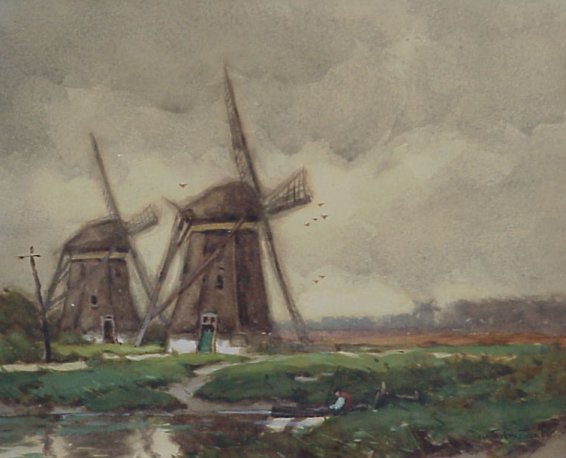
Walter C. HARTSON, (American, 1866): Dutch landscape with windmills and a figure in a boat- http://www.burchardgalleries.com/auctions/2002/jan2002/l027a.jpg
Herman A. Webster (American, 1878-1970)- http://www.timsmills.info/Journal/BULLET61.HTM
Map of Windmills in Manhattan-
Map-http://www.sunysb.edu/libmap/img0009.jpg
More information on the map- http://www.sunysb.edu/libmap/Manatus.htm
Windmills on the farm-
Grants for farm windmills- http://www.elpc.org/energy/farm/index.php?gclid=CKzbkaSewZACFTyKOAodDCYSZg
Perhaps you have developed an interest in other uses of windmills-
http://www.newsday.com/community/guide/lihistory/ny-history-hs333a,0,6371263.story
Commercial sources that may provide information on windmills (Listing does not constitute endorsement; Other commercial providers may submit links via comments)-
Beckermills
Brasada
Bask
Gaiam
windmilloutlet
You can generate power by turning a crank:
http://www.nextag.com/crank-generator/search-html
http://www.hometrainingtools.com/catalog/p_el-genhand.html
It would be good to work with pin wheels, water wheels or crank generators in lab activities or experiments to help understand the points made. Similarly field trips to old mills, singing, "Old Mill Stream," or visiting a farm where a wind mill is used, or touring the windmills of New York State (part of the Dutch settlers' cultural heritage and positive influence on the state), or in several other other states (Illinois, Indiana,Ohio, Wisconsin, Michigan, Iowa ...), would also enhance learning about sustainable energy and power generation. (If you know a good website on windmills in your state, please add it to the comments.)
Some foundations work to reduce global warming. Here are some (Listing does not constitute endorsement; Other foundations and organizations may submit links via comments)-
http://www.carbonfund.org/
https://www.greentagsusa.org/GreenTags/index.cfm
Adopt a windmill- http://www.communityenergy.biz/adopt/adopt_windmill.html
Read more:
Baker, T. Lindsay. A Field Guide to American Windmills. Norman, OK: University of Oklahoma Press, 1985. (Large volume—the ultimate windmill resource.)
Dennis, Landt. Catch the Wind: A Book of Windmills and Windpower. NY: Four Winds Press, 1976.
Ellis, Edward Robb, The Epic of New York City: A Narrative History. Carroll and Graf, Publishers, 2004.
Torrey, Volta. Wind Catchers: American Windmills of Yesterday and Tomorrow. Brattleboro, VT: The Stephen Greene Press, 1976.
Woelfle, Gretchen. The Wind at Work: An Activity Guide to Windmills. Chicago: Chicago Review Press, 1997.
A Link of Interest found while searching windmills...Farm Math for Young Children: http://www.michigan.gov/hal/Publish Post0,1607,7-160-15481_19268_20778-52087--,00.html
Wednesday, December 19, 2007
Convection, Conduction, and, Radiation
Today, a student asked me a question about conduction, convection and radiation: "I am always confused between the difference of conduction, convection and radiation. What is being used in pouring hot water from a thermos?"
Students will often ask things that are assigned as homework. This might have been a homework question, or, it might have been genuine curiosity. I am always glad when students are curious.
I've taken the liberty of discussing the topic here because it is a topic on many state standards.
For these types of questions, try to guide a student in finding an answer. In this way, he or she is likely to remember the content learned. Here is a sample set of guiding questions and activities. I have also included some movies. Your students might be able to make movies that are more exciting and helpful to them. Review the "Botany Beat" or Tomato movies for some ideas. Here is one student's movie:
First, have you defined all the words? (You can use the dictionary links at the bottom of the page. Be sure to note down the date and the source you used.)
Conduction is ________________________________________________________
Here is a simulation on conduction:
And, here is an animation about conduction:
Convection is ________________________________________________________
Here is a movie on convection currents:
What do hot and cold have to do with convection?
Here's another convection movie showing some experiments and relating them to every day life.
Radiation is ________________________________________________________
Here is an animation on radiation and convection:
If you have trouble remembering them, try writing the definitions three or four times , or, try drawing a picture or writing a song about each one.
Also, try discussing these ideas with your friends or where you get snacks after school or with a mentor or adult in your family or community. These things can help you to remember them.
Did you brainstorm about them?
Do you have a thermos? If you don't have one, try to borrow one, otherwise, the question will be hard to answer.
If you put hot water in a thermos, can you feel the heat outside the thermos when you hold it?
What about if you put your hand over the thermos, can you feel heat, even when you are not touching anything?
What if you compare putting a plastic spoon into the hot water with putting a silver spoon into the hot water. What happens?
Think of things you know, for example:
Now, think again about the question. When you pour hot water from a thermos, do you feel heat without touching it?
Does some heat stay in some matter, yet move?
Does some heat transfer from the hot water to the bowl or sink you are pouring it into?
Now that you have thought about all these things, and tried some of them, I think you can be confident of the answer that you develop. Be sure to back up the answer with why you picked it. You might speak, write and draw your answer, too. Let me know what you find out. Write back if you are still stuck. Dr. J
Related links:
http://home.howstuffworks.com/thermos1.htm
http://www.newton.dep.anl.gov/askasci/phy99/phy99x81.htm
http://www.sciencebuddies.org/mentoring/project_ideas/Phys_p032.shtml
http://www.comsol.com/showroom/gallery/1448.php
Update... 2009
rockytop.adams12.org/growlercore/documents/Weather_notes.ppt
http://www.accidentalscientist.com/2009/08/conduction-convection-and-radiation-and.html
(c)2007, 2008, 2009 J. S. Shipman
Students will often ask things that are assigned as homework. This might have been a homework question, or, it might have been genuine curiosity. I am always glad when students are curious.
I've taken the liberty of discussing the topic here because it is a topic on many state standards.
For these types of questions, try to guide a student in finding an answer. In this way, he or she is likely to remember the content learned. Here is a sample set of guiding questions and activities. I have also included some movies. Your students might be able to make movies that are more exciting and helpful to them. Review the "Botany Beat" or Tomato movies for some ideas. Here is one student's movie:
First, have you defined all the words? (You can use the dictionary links at the bottom of the page. Be sure to note down the date and the source you used.)
Conduction is ________________________________________________________
Here is a simulation on conduction:
And, here is an animation about conduction:
Convection is ________________________________________________________
Here is a movie on convection currents:
What do hot and cold have to do with convection?
Here's another convection movie showing some experiments and relating them to every day life.
Radiation is ________________________________________________________
Here is an animation on radiation and convection:
If you have trouble remembering them, try writing the definitions three or four times , or, try drawing a picture or writing a song about each one.
Also, try discussing these ideas with your friends or where you get snacks after school or with a mentor or adult in your family or community. These things can help you to remember them.
Did you brainstorm about them?
Do you have a thermos? If you don't have one, try to borrow one, otherwise, the question will be hard to answer.
If you put hot water in a thermos, can you feel the heat outside the thermos when you hold it?
What about if you put your hand over the thermos, can you feel heat, even when you are not touching anything?
What if you compare putting a plastic spoon into the hot water with putting a silver spoon into the hot water. What happens?
Think of things you know, for example:
The sun rays radiate.
The convection oven has heat rise and fall in circles.
A copper wire conducts electricity.
The convection oven has heat rise and fall in circles.
A copper wire conducts electricity.
Now, think again about the question. When you pour hot water from a thermos, do you feel heat without touching it?
Does some heat stay in some matter, yet move?
Does some heat transfer from the hot water to the bowl or sink you are pouring it into?
Now that you have thought about all these things, and tried some of them, I think you can be confident of the answer that you develop. Be sure to back up the answer with why you picked it. You might speak, write and draw your answer, too. Let me know what you find out. Write back if you are still stuck. Dr. J
Related links:
http://home.howstuffworks.com/thermos1.htm
http://www.newton.dep.anl.gov/askasci/phy99/phy99x81.htm
http://www.sciencebuddies.org/mentoring/project_ideas/Phys_p032.shtml
http://www.comsol.com/showroom/gallery/1448.php
Update... 2009
rockytop.adams12.org/growlercore/documents/Weather_notes.ppt
http://www.accidentalscientist.com/2009/08/conduction-convection-and-radiation-and.html
(c)2007, 2008, 2009 J. S. Shipman
Monday, December 17, 2007
Overlap of art and science and marketing!
This movie appears to be an advertisement. But, it is done in an artistic way and involves curiosity about living things. I think you will enjoy it.
Thursday, December 6, 2007
Wednesday, November 7, 2007
Even more virtual botanical tours
Lewis Ginter Botanical Garden:
Daniel Stowe Botanical Garden:
Vacratot Botanical Garden:
Jasabet's Botanical Garden:
Villa Hanbury Ventimiglia Italy Liguria Botanical Garden:
Jardin Marco Polo:
Jardin des Plantes:
http://www.aviewoncities.com/paris/jardindesplantes.htm
,
Daniel Stowe Botanical Garden:
Vacratot Botanical Garden:
Jasabet's Botanical Garden:
Villa Hanbury Ventimiglia Italy Liguria Botanical Garden:
Jardin Marco Polo:
Jardin des Plantes:
http://www.aviewoncities.com/paris/jardindesplantes.htm
,
Sunday, October 28, 2007
Art and Science
Art is used in science and science uses art. Here are some related links. (under development)
http://www.botanicalartists.org/
http://www.baasa.co.za/
http://www.botanicalartists.org/
http://www.baasa.co.za/
Subscribe to:
Posts (Atom)


 ~~~~~~~~~~~~~~~~~~~~~~~~~~~~~~~~~~~~~~~~~~~~~~~~~~~~~~