Here's a site for people interested in improving science literacy and education, including but not limited to: Parents, science educators, home school teachers, science industries, botanical gardens, museums, and, zoological garden staff. Please feel free to post a comment with ideas or links. Use the search bar at the top left of the blog to find subjects (If you don't find something, please leave a comment.). The left hand column has reference links and the bottom has a survey.
Hi. I have extensive experience in science education and tutoring, a doctorate in a biological field, research that requires advanced knowledge in engineering and biochemistry. My teaching includes courses and laboratories in biology, chemistry, Earth science, genetics, botany, anatomy and physiology and many other subjects on a college level, and also in pre-K-12 science classes, will help you to succeed. At Harvard University, I honed my algebra teaching skills, after getting my doctorate at UNH. That math expertise facilitates math, engineering and advanced science subject learning for my students. I am certified to teach middle school and high school and have taught for (10+ years at those levels. I am willing to tutor in NH, MA, NY, and elsewhere via Skype including students in Africa and Europe. For example, a Hungarian student via Skype got the top score on his exit exam from university.) I present workshops in higher order thinking skills, too, for colleges, schools, parents, families, libraries and home schools.
I have taught from pre-Kindergarten through University, and have been successful in industry, so, I can help you fill in gaps in your education. If you need to close the gap because your high school didn't prepare you for college, I can help you do that. I am great with STEM (Science, Technology, Engineering, and Math) topics. I do not do the work for you. I help you know how to learn what you need to know to succeed.
The students I've had for biology passed their nursing board exams the first time. (Congratulations to you!)
I also help students develop career direction so they can focus their studies better. If you are serious about wanting to learn, I can help you.
Connect with over 30,000 local, in-home tutors at WyzAnt.com!
"Methane trapped in the Arctic Ocean's permafrost is leaking into the atmosphere at an alarming rate. Scientists say the amount of methane currently seeping out of the East Siberian Arctic Shelf is equal to the annual total previously estimated from all of the world's oceans. Methane concentrations in the Arctic are at their highest levels in 400,000 years. Experts are divided on what this means for the environment, but some worry that it could worsen global warming."
Can you bridge this up to the journal articles with Reach Reading TM? Give it a try.
Update April 8, 2010: Okay, so what did you find? Did you do a literature search on line? Here's something I found... "Global warming is bringing rapid change to the Arctic. The melting of sea ice and glaciers is increasing faster than scientists predicted even a year ago. Environmental change is forcing legal and economic developments, which in turn will have serious environmental and social consequences," (Source: http://www.ingentaconnect.com/content/mnp/estu/2008/00000023/00000003/art00008 Accessed April 8, 2010).
Does this article fit the topic? Should we keep looking?
Between 1977 and 2006, children increased their caloric intake by an average of 113 calories a day, and more of these calories are coming from salty snacks and candy. The childhood obesity rate, meanwhile, has risen to more than 16 percent.More ...Discuss
Source: In the News(http://www.thefreedictionary.com/lookup.htm) on read-about-it.blogspot.com; Accessed 7 Mar 2010.
Sometimes people think America has tons of food so everyone should be healthy. What do you think? Rules governing the food supply differs in different countries. We have a lot of high frucose corn syrup in our food supply that in the 1970's wasn't there. Could there be a cause and effect situation?
I have done laboratories with students both at four-year colleges and community colleges in which students analyzed their own food intakes. The data from these analyses over 20 years shows the same trend as the, "In the News," article shows today. But at the community college, there are many recent immigrants, and their data is different than the average data acquired. Students from Ethiopia, for example, ate very little ate very little when compared to the other students, yet, the nutrients they acquired were at a low level but where there were no deficiencies. Students who had grown up in the Northeastern USA, however, typically showed very high values of some nutrients and below survival levels of others. The high values were typical of things causing diabetes, heart disease, obesity among others. The low levels were in nutrients affecting fertility and mood.
Students valued this experiment. They could compare there, "before" data to their, "after" data, after learning some nutrition. They could compare how they ate now to a diet they wanted to go on. They could compare what swapping junk food for fruit would do. In essence they could be the scientist and design the experiment. This exercise engaged many students in further pursuit of science, rather than stiooing with the one, "terminal" science course required of non-majors in biological sciences. (Such courses are called, "terminal," because many students stop their science education with the required course, It benefits society if students learn to ant to keep up with science, or, at least appreciate spending their tax dollars on research.) Some became science majors, but, many took two more science courses. Others took no more, but, at least now liked science and understood the value of good experimental design. The students were adults and the treatments were still regular foods that they would have eaten anyway.
Science literacy is helped by discussing current events like this with students. It is news that affects them. It can lead to more in-depth science reading if students are deeply interested. Can you get into the journal articles?
1. There was a typographical error when first posting this article that is funny. I'd like to share it with you: The title is, "Think before Snacking...Look at all the research being done...," but, with the typographical error it was,
Thin before Snacking...Look at all the research being done...
2. The, "In the News," story was based on http://www.reuters.com/article/idUSTRE6210HC20100302, a story about science in Reuters which mentions researchers Piemas and Popkin. I did not yet find a journal article by Piemas and Popkin, the researchers mentioned in the Reuters article. It doesn't mean it's not there, but, I didn't find the research mentioned published yet. I put a link to Popkin. I did not find Piemas. http://www.cdc.gov/about/leadership/leaders/Frieden.htm is a post linking to Dr Frieden at the CDC, also mentioned in the Reuters news story.
If you or someone in your family has a disease, you might Reach ReadTM to find out more about it. Students are the same way. The first journal article on a particular subject might be tough, but by the fifth one, you got most of the lingo down, and the reading becomes easier. The first one, though, you'll need to keep a dictionary (physical or digital) nearby.
When you have, "a need to know," hard words won't stop you. Even if you can't read the article, you can carry it in to your doctors' offices as your own, "reading material," and have a positive effect on your health care (my opinion and experience).
Now, back to the example of, "glycemic index." Let's look at the author and title of the above-referenced journal article:
Monounsaturated Fatty Acid Diets Improve Glycemic Tolerance through Increased Secretion of Glucagon-Like Peptide-11
Antonio S. Rocca2, Jonathon LaGreca3, Juliana Kalitsky3 and Patricia L. Brubaker
Departments of Physiology (A.S.R., J.L.G., J.K., P.L.B.) and Medicine (P.L.B.), University of Toronto, Toronto, Ontario, Canada
Address all correspondence and requests for reprints to: Patricia L. Brubaker, Ph.D., Rm 3366, Medical Sciences Building, 1 King’s College Circle, University of Toronto, Toronto, Ontario, Canada, M5S 1A8. E-mail: p.brubaker@utoronto.ca.
Do you have them all on your list? Congratulations! Now for the rest of us...
Do not panic!
You are in the Reach ReadingTM zone. Whew!
Take it slowly, like Einstein did when he read. It's ok to take a long time, even to get through the title. Oh, by the way, science fair people, it is a good idea to support some of your work, in background information or in discussion, by citing journal articles, so, take your time. You can do it. (Do I sound like a cheerleader yet?) Ah! That is more like it. relax. You are not supposed to know all the words. In fact,
No one knows all the words.
Source: Joan Beinetti, Reading Specialist and Home School Expert; Personal Communication with J. S. Shipman; 1989.
Don't you feel better knowing that, "No one knows all the words." Even geniuses use dictionaries. You don't have to be afraid of science any more (if you ever were.)
That release felt grand, didn't it. You don't have to be afraid in front of students of needing to look up words. It is expected!!! They should expect it of themselves. You are, "modeling," that desired behavior while learning new vocabulary yourself.
After slugging through the first article, the rest get easier and easier. Note, I didn't say easy. But after about five articles, they may seem easy to you. And, you will know a lot about your disease.
"Glycemic index," isn't a disease," you say.
"I know that," I reply. So, let's get on with the matter at hand. People with diabetes, pre-diabetes, people who are hungry all the time, people who drink a lot of water (more than everyone else), people who are hypoglycemic, people who are obese, people who are sooo slim, people who are, "just right," ...many people have diseases related to the, "glycemic index."
Sometimes Reach Reading™requires a researcher to look at articles in other languages than he or she knows. Hmmm! That won't stop someone who wants to know something, He or she will, "Reach!" Then, a translation tool, for example, http://webdev.quickfound.net/language_translation_tools.html might be useful and we can look at more of the web page, too:
Concepto Jurídico no es Estructural. Legal Concept is not structural.
Tiene una explicación funcional (en definitiva) y nominal. It has a functional explanation (ultimately) and nominal.
Esto se hace evidente al analizar al Derecho Penal. This becomes evident when analyzing the Criminal Law.
Ergo, la pena, y al diferenciarla del tributo. Ergo, grief, and differentiate the tax.
El tributo se diferencia de la multa en su función. The tribute to the fine difference in function.
La pena tiene carácter de reproche. The penalty is a matter of reproach.
Según Moore la pena infringe reproche por conductas que van en contra de principios morales verdaderos. According to Moore's sentence for conduct that violates reproach go against moral principles true.....
FUNCIÓN DE LA FUNCIÓN ROLE OF THE ROLE
1.Identificación de la función. Identification of the function.
2.¿Por qué la función es improbable sin estructura? Why the function is unlikely without structure?
3.Estructura que neutralice la improbabilidad. Structure to neutralize the improbability.
4.la estructura hace probable, y no necesario, el cumplimiento de la función. structure makes it likely, and not to the fulfillment of the function.
FUNCIÓN DE LA FUNCIÓN دور دور . 1Identificación de la función. تحديد وظيفة.
. 2¿Por qué la función es improbable sin estructura? لماذا وظيفة من غير المرجح بدون الهيكل؟
. 3Estructura que neutralice la improbabilidad. هيكل لتحييد الاحتمال.
. 4la estructura hace probable, y no necesario, el cumplimiento de la función. هيكل يجعل من المحتمل ، وعدم وفاء للمهمة.
ROL VAN DIE ROL
1.Identificación de la función. Identifikasie van die funksie.
2.¿Por qué la función es improbable sin estructura? Waarom die funksie wat dit onwaarskynlik is sonder struktuur?
3.Estructura que neutralice la improbabilidad. Struktuur te neutraliseer die onwaarschijnlijk.
4.la estructura hace probable, y no necesario, el cumplimiento de la función. struktuur maak dit waarskynlik is, en nie aan die vervulling van die funksie.
If we see then that the article is not what we wanted, though it is an interesting article on legal concept of function/role, then we can continue our search on functions of a mathematical nature.
going in a few pages we find the material quoted below:
General
The arithmetic-geometric mean appeared in the works of J. Landen (1771, 1775) and J.‐L. Lagrange (1784-1785) who defined it through the following quite‐natural limit procedure:
C. F. Gauss (1791–1799, 1800, 1876) continued to research this limit and in 1800 derived its representation through the hypergeometric function .
If you are like many readers, you say, "Whoa!" as soon as you reach the equations. Slow down. Don't panic. In fact, perhaps, "whoa," is the right word. Take your time.
Compare this reading to a video game. It wouldn't be fun if you knew where all the treasures are. The fun is in the challenge. Before you get into decoding the equations and math jargon, check if the article is on what you want to learn, Then, slow down and have fun with it. You'll soon come up to speed.
Try another source:
In mathematics, the arithmetic-geometric mean (AGM) of two positive real numbersx and y is defined as follows:
First compute the arithmetic mean of x and y and call it a1. Next compute the geometric mean of x and y and call it g1; this is the square root of the product xy:
Then iterate this operation with a1 taking the place of x and g1 taking the place of y. In this way, two sequences (an) and (gn) are defined:
These two sequences converge to the same number, which is the arithmetic-geometric mean of x and y; it is denoted by M(x, y), or sometimes by agm(x, y).
This can be used for algorithmic purposes as in the AGM method.
Does this second source help you understand better?
-- Key Deer (Odocoileus virginianus clavium) are an exciting part of a visit to the Florida Keys, a string of islands dividing the Atlantic Ocean and the Gulf of Mexico.
Patience pays off when trying to observe them. When first looking, you might not readily spot the deer.
A stop at the visitors center, and Jean might tip you off to where you can see them. Her tips lead to these pictures (and many others, not posted here.) Someone else came up as the photographer was taking the pictures and scared off the deer...so, what does that suggest? To me, it says, "if you want good pictures you likely need to sit quietly and wait." What do you think about taking photos of wildlife?
Did you see only the deer, or, did you also see the plants the deer was munching on? Were you plant blind? Remember that the deer (and we, too) rely on plants for many purposes. What plants do you see?
Have you thought about what the Key Deer eat? I know some people have felt bad that their gardens were eaten. But, what if you want to know more? Science literacy can help students get into journal articles that are original source laboratory reports. One technique for improving science literacy, and finding out more about what the deer eat, is to encourage Reach Reading tm into the journals. For example, http://www.jstor.org/pss/3809097 is about the plant foods deer browse on and how to foster their growth. It may be of interest to some students.
Bridging from ordinary articles about science up to technical information on the same topic is one of the main benefits of Reach Reading(TM). This post will review an example bridging from an article on Pomegranites found in today's news, up to the technical journal articles on the same topic. Here's a link to the news article: http://www.reuters.com/article/idUSTRE6045JT20100105
The article starts,"An acid found in pomegranates appears to block aromatase, an enzyme that converts androgen to estrogen, a hormone that plays a role in the development of breast cancer, the researchers wrote in the journal Cancer Prevention Research." It gives us a few clues.
Good: There are a few familiar items: acid, pomegranate, hormone, estrogen, breast cancer. Some might even be familiar with enzyme. A beginning step in Reach Reading(TM) is to identify any words we don't know and define them. Granted this takes time, but, ultimately, it speeds up comprehension. It is important to use articles on topics of interest to the student when doing reach reading. I would have students bring in the initial science articles that they find in the newspaper or on line. Ah, there is another clue, "Journal of Cancer Prevention Research."
Jot down a few ideas about what you know already:
acid
pomegranate
hormone
estrogen
breast cancer
enzyme
Now, look up word you don't yet know, and find definitions for them. (Don't forget to get the complete reference for the definition. For example,
"Aromatase: An enzyme involved in the production of estrogen that acts by catalyzing the conversion of testosterone (an androgen) to estradiol (an estrogen). Aromatase is located in estrogen-producing cells in the adrenal glands, ovaries, placenta, testicles, adipose (fat) tissue, and brain."
The definition goes on and talks about breast cancer. You might want to come back to it later if it wasn't yet helpful, so, keep good track of where you got your information. Remember, we found this at: http://www.medterms.com/script/main/art.asp?articlekey=15844. Accessed 14 Jan 2010.
Does the definition help you? If not, try another: http://en.wikipedia.org/wiki/Aromatase. The Wiki link has a drawing of aromatase. Then, a set of definitions related to hair loss gives another definition of, "aromatase": http://www.americanhairloss.org/hair_loss_glossary/. Soon enough, you'll find a definition that starts to make sense to you. Don't worry if you don't completely get it. Perhaps English isn't your first language. No problem, just keep going. You will catch on.
French: "L’aromatase est une enzyme du groupe Cytochrome P450 qui permet de convertir les androgènes surrénaliens comme la testostérone en œstrogène ..." fr.wikipedia.org/wiki/Aromatase
Portuguese: A aromatase pertence ao grupo das enzimas do citocromo p450 e age como mediador da aromatização de andrógenos em estrógenos. pt.wikipedia.org/wiki/Aromatase
Perhaps reading definitions in other languages will help you, though, often the science words are cognates and are very similar to eachother in many languages.
Now, you try finding definitions for other words you don't know, for example, if you don't know, "androgen," you can look that up.
androgen
Then, we'll continue... The idea is to have fun with it. Don't feel it is a chore. Feel like you are on a treasure hunt in a video game, or, that you are making a great discovery. Enjoy the process of, "Reach Reading(TM)".
We can scan the article and see if a scientist is mentioned. Yes, there, in the next paragraph, "Shiuan Chen." Looking further, I found this information via Google: "Requests for reprints: Shiuan Chen, Department of Surgical Research, Beckman Research Institute of the City of Hope, 1500 East Duarte Road, Duarte, CA 91010. Phone: 626-256-4673, ext. 63454; Fax: 626-301-8972; E-mail: schen@coh.org." The Chen article is on white button mushrooms, however: http://cancerres.aacrjournals.org/cgi/content/full/66/24/12026 (Anti-Aromatase Activity of Phytochemicals in White Button Mushrooms (Agaricus bisporus) Shiuan Chen1, Sei-Ryang Oh1, Sheryl Phung1, Gene Hur1, Jing Jing Ye1, Sum Ling Kwok1, Gayle E. Shrode2, Martha Belury2, Lynn S. Adams1 and Dudley Williams1, so, let's keep looking.
(Notice first, however, that the article gives contact information for the authors: "1 Department of Surgical Research, Beckman Research Institute of the City of Hope, Duarte, California and 2 Department of Human Nutrition, The Ohio State University, Columbus, Ohio.")
But at the January 2010 issue of Cancer Prevention Research, http://cancerprevention research.aacrjournals.org/current.dtl, we find, " Lynn S. Adams, Yanjun Zhang, Navindra P. Seeram, David Heber, and Shiuan Chen. Cancer Prev Res 2010 3: 108-113. doi: 10.1158/1940-6207.CAPR-08-0225[Abstract][Full Text][PDF] ." There is the original source for the abundance of articles found in the news today about pomegranate. The article itself will give you a mouthful, for example, "On consumption,pomegranate ETs hydrolyze, releasing ellagic acid, which isthen converted to 3,8-dihydroxy-6H-dibenzo[b,d]pyran-6-one ("urolithin")derivatives by gut microflora, " where every other word (or nearly so) is an unknown...(so, we can go back to the definition game...) If you have breast cancer, or, know someone that does, you'll likely want to understand every word (Or, if not, you might want to bring a copy of the article to you doctor's office, so he or she will know, you've, "Done your homework.")
I hope that this has made, "Reach Reading(TM)" fun for you. If not, we'll try again another day. My students love it, but, perhaps not being with me in the classroom, but, rather. on-line, it might not come across as as much fun. Please give me feedback and ask me questions.
Dr. J shipmanjs@gmail.com
P.S.: Either men or woman can get breast cancer, so, I hope that you found the article of interest. Now that you are one of the world's few that knows about , "aromatase." perhaps you'd like to Reach Read(TM) what it has to do with the prostate: http://cat.inist.fr/?aModele=afficheN&cpsidt=17598374. (c) 2010 J S Shipman
Today information is readily available. But, how does a student evaluate the literature available? "Hype" and sales pitches are easy to read, but, do they provide accurate information? Some do. Some do not. How do you know?
There is much controversy over human chorionic gonadotropin, better known to the general public as HCG. How can we use science literacy skills to evaluate this compound? If you are a regular reader of this blog, you know we typically start with general information and progress through Reach Reading TM to the refereed journal articles, which are peer reviewed.
Obesity is a problem. HCG is a product touted to contribute to lasting weight loss(Here's one website, but, there are many: http://www.yourhcg.com). Is that a factual concept? We know money is made from people trying various products or surgery to lose weight. How can one use science literacy to determine which information to believe? I am not saying use this example, HCG, for students. Pick something of interest to them. For example, if they have a pet cat, they might be interested in pet food advertisements and research that has been done on pet nutrition.
Do a search engine search for HCG (or a student- or teacher- selected topic). Pick a few articles. Evaluate them. How difficult is the vocabulary? Are the claims backed up with fact? Take some notes on points that interest you and remember to note the information to site the sources (left hand column of the blog has some style manual links if you need assistance with that).
Now, using some words or phrases that you find in the general literature to help you find information in the technical literature...the laboratory reports. Remember. the laboratory reports follow a format that is international in nature and are peer-reviewed (evaluated by other scientists in the same field):
Introduction (background information, and hypothesis to be tested),
Materials and Methods (procedures)
Results (data)
Discussion and Conclusions (discussion of the data, suggested public policy, suggested future experiments and requests for funding...)
Literature Cited (gives complete source information)
These "laboratory reports" will be easy to recognize if you follow the same format for your own classroom laboratory experiments (granted, simplified as per student ability).
Here are some examples of peer-reviewed ("refereed") journal articles on HCG:
1. Human Chorionic Gonadotropin (HCG) in the Treatment of Obesity: A Critical Assessment of the Simeons Method by Frank L. Greenway, MD and George A. Bray, MD. West J Med. 1977 December. Vol. 127. No. 6. Pp. 461-463. PMCID:PMC1237915 http://www.ncbi.nlm.nih.gov/ pmc/articles/PMC1237915/
2. Effect of human chorionic gonadotrophin on weight loss, hunger, and feeling of well-being by W. L. Asher M.D.1 and Harold W. Harper M.D.1 From the American Society of Bariatric Physicians Research Council, 333 West Hampden Avenue, Englewood, Colorado80110. American Journal of Clinical Nutrition. Vol 26. Pp211-218. (c) 1973 by the American Society for Clinical Nutrition, Inc. http://www.ajcn.org/cgi/content/abstract/26/2/211
These two articles have opposing conclusions, so, to formulate my own opinion on this topic, I would have to find more research. Knowing myself, I'd probably do an exhaustive search. The idea is not for students to take my opinion, nor for them to take their teacher's opinion, but, rather for them to learn to form their own opinions and be able to back those opinions up with information from refereed journals.
Check who paid for the research. Does the article support or attack or remain neutral on the points of interest to you? Were the research methods sound? (This type of analysis must be done at the students level...but even pre-school children get the concept of control versus experimental, even if they may not know all the vocabulary.) Is the vocabulary tougher? If we want to know something, we learn the vocabulary. (I have seen students in elementary and high school science classes use the refereed journal articles and stay much more engaged in science class as a result. But, even if the articles are too hard to read, the students get the idea that research exists and if they have a need to know, they will find and learn to read the articles. Students have come back years later to thank me for introducing them to the journal articles. Two more notes: 1- Journal articles exist in all fields...in case you are an artist, or a history buff... 2- People that win the national science fairs typically read a few refereed journal articles.)
Sometimes you might come across related articles that are a bit off topic, yet peek interest in further study, such as research ...
Find some refereed research articles on your selected topic(s).
Plan to write a persuasive essay based on your findings.
Most of all, have fun. I think of this as, "mental recreation."
Edit, Nov. 4, 2009: Not convinced that refereed journal article reading is an important part of science literacy? Want one parent's viewpoint on reading journal articles, which concurrently explains basic biology and genetic engineering? Try reading The Unhealthy Truth: How our Food is making us Sick and What We can do about It, by Robyn O'Brien [and] Rachel Kranz (Broadway Books (Random House), New York. 2009). Read more.
(c)2009 J S Shipman All rights reserved. Portions (c)1985-2009 J S Shipman. Used with permission of the author.
►Using the internet to do a literature search on ants and oleic acid, some of E O Wilson's earlier research work which was a small part of the great ideas Wilson presented at the World Science Festival, a large number of related references can easily be found. Here are just a few from a Google search:
Now, say you knew nothing of ants before. These articles would likely contain many words that you don't know, and, many ideas that are new to you. By the time you waded through three or four of them, dictionary in hand (or internet dictionary by your side) you could likely read them relatively easily. (Check out: "Reach Reading™") You would also likely know more than most people about ants... You can go beyond ants with your reading: You can read and find out many things to give you ideas for more research, ideas for improving the world, ideas for fixing the economy, ideas for curing diseases, ideas for growing more food, ideas for saving lives. Imagine that!
Sciences, like biology, have many new words...readability in current topics in science could mean people would have to read beyond a college level... But, we need to read difficult material sometimes to get information to make our lives better. Reflect and comment on this topic.
Do you love to cook? Or, do some of your students or their parents or grandparents love to cook? Spices provide an interesting and potentially economically interesting link to the technical science literature that you may all find exciting. An introduction to journal articles is perhaps easier if you have another interest, such as cooking, to which you can link new skill in science reading.
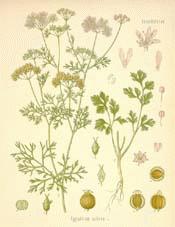
For example, Coriandrumsativum L., the spice coriander and also fresh coriander greens, which in Spanish is, "Cilantro," is the subject of the following primary source article, or..."lab report:"
Coriander Under Irrigation in Argentina
Gustavo Luayza, Roberto Brevedan, and Rosana Palomo
Take a look at it and see if you can find the various parts that are common among laboratory reports around the world.
Introduction
What did you find?
Materials and Methods
What did they do? What did they use to do it?
Results
Are there charts, graphs, photos, verbal descriptions? Explain what you found. (Opinions should not be located in this part of the laboratory report. Are there any here?)
Discussion and Conclusions (Summary)
What opinions are expressed (Here, they can be expressed!)? Is public policy suggested? What do the authors say about more experimentation? Are other sources of information used in the discussion?
Literature Cited
Did the authors site primary sources? Secondary sources? Personal communication?
Reflection: Do you use similar parts in your laboratory reports? What do you think about what you read? Could you understand it? Perhaps you could just get one or two ideas. If you are just starting to read journal articles, that is certainly to be expected. (Even if you are familiar with journal articles in one field, looking at them in another field may require more vocabulary development and other "Reach Reading" skills.) So do not worry if journal articles seem hard.
So, spices and cooking can provide an introduction to the technical literature. To make the introduction here on coriander relate to other experiences in your life, you might try some foods made with this plant. (Do remember not to eat in the laboratory, however. Follow safety rules.)
Add in some geography: Look at the places where coriander is grown and the countries that use the herb and seeds of coriander in their cuisine.
Here's the opening line of the abstract from, "Patrick J. Neale, Anastasios Melis' article on a small green organism: "Chlamydomonas reinhardtii was grown at photon flux densities (PFDs) ranging from 47 to 400 μE.m-2 s-1." Now, unless you are a phycologist (double-click any word for the meaning), then you've probably found three or four words you don't know, even if you are a great reader, right in the first sentence. This "jargon" is typical of refereed journal articles, by the way. A poor reader might become discouraged with the words found in journal articles, but, those of you familiar with my, "Reach Reading tm" technique, or, with Einstein's ability to stay on one paragraph till he figured it out, know that that is just a challenge of reading in science. You won't let yourself worry about a new set of vocabulary! As my sister, a reading specialist, says, "No one knows all the words."
The abstract continues, "The total cellular content of chlorophyll (Chl) was twice as high in the low light (LL) versus high light (HL) grown cells." Phew, you got some of that! I mean most of us learn the simplified equation of photosynthesis when we are children and we can recognize light, cells, perhaps chlorophyll, and, other words here. We can also get the gist of the article...A ha! We are reading about plant response to light... I mean, there might be more, but, there is something we can get.
Let's try some reach reading and look up some words. Let's see what else we can understand. In this way, reading an article becomes like finding treasure in a computer game. Let's see who can find the most treasure. Try to then use the words to paraphrase what you think the authors are saying.
In this way, elementary and secondary school, children and teens (and for that matter, adults), can build technical reading skills. They are playing a game.
Let's look at the ending of the abstract, "Thus the stoichiometry of electron transport complexes changes in response to growth PFD and this change is correlated with the response flexibility of algal photosynthesis in diverse light environments." Though there are difficult words, we're not afraid of them now. It is a challenging game, perhaps, but, it is fun. High school students should recognize, "stoichiometry," from chemistry classes. Here they get to see it in a, real "laboratory report," the refereed journal article.
I hope reading just this tiny bit of the abstract of the article has gotten you interested in reading more. You might be interested in contacting a phycological society, or, getting the full article via inter-library loan, or, you might wonder about plant pigments, or have other questions that could become wonderful experimental designs. Typically students winning science fairs use such journal articles, even in elementary school.
Try reading more of these authors' works. Do you know how to find them? Please feel free to ask questions in the comments. Jargoning is typical in many fields outside of science, too. So, what you learn about "playing" with science words in journal articles is applicable in all subjects.
Dr. J
[under development]
Source: Patrick J.Neale21AnastasiosMelis1. 1986. Algal photosynthetic membrane complexes and the photosynthesis-irradiance curve: a comparison of light-adaptation responses in Chlamydomonas reinhardtii (Chlorophyta)1. Journal of Phycology. 22:4. 531-538 (1 Patrick J.Neale2AnastasiosMelis1

 Posts
Posts


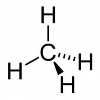 Here is the quote and image from, In the News (Quoted here because it disappears from the left hand column... to make room for new news... tomorrow.):





 ~~~~~~~~~~~~~~~~~~~~~~~~~~~~~~~~~~~~~~~~~~~~~~~~~~~~~~